2026 Energy Outlook: Why Supply, Demand, and Capital Discipline Are Back in Control
January 22, 2026
As we close out 2025 and move decisively into 2026, global energy markets are re-anchoring around a familiar but long-overdue framework: supply and demand fundamentals. This shift is constructive. After years of distortion driven by policy narratives, speculative capital, and uneven investment signals, the market is once again rewarding tangible assets, disciplined capital allocation, and real energy demand.
This recalibration is visible across multiple fronts. Central banks continue to increase gold holdings, OPEC is adjusting its long-term oil pricing framework, and investors are rotating back toward hard assets—particularly oil and gas. Together, these trends point toward a more durable and rational energy market in 2026.
The Return to Tangible Assets
Demand for gold, silver, and other tangible assets remains strong. Over the past several years, central banks—particularly in China, India, and parts of Eastern Europe—have steadily increased gold reserves as part of broader diversification strategies. The United States remains the world’s largest holder of official gold reserves, a position that continues to support confidence in the U.S. dollar during periods of macroeconomic uncertainty.
At the same time, the rapid expansion of artificial intelligence, cloud computing, and data center infrastructure is driving a meaningful increase in electricity demand. This trend is also boosting demand for critical materials such as copper, silver, lithium, and steel, as well as the energy required to mine, refine, transport, and utilize them.
As capital flows back into tangible assets, the historical relationship between oil and precious metals is again gaining relevance in market discussions.
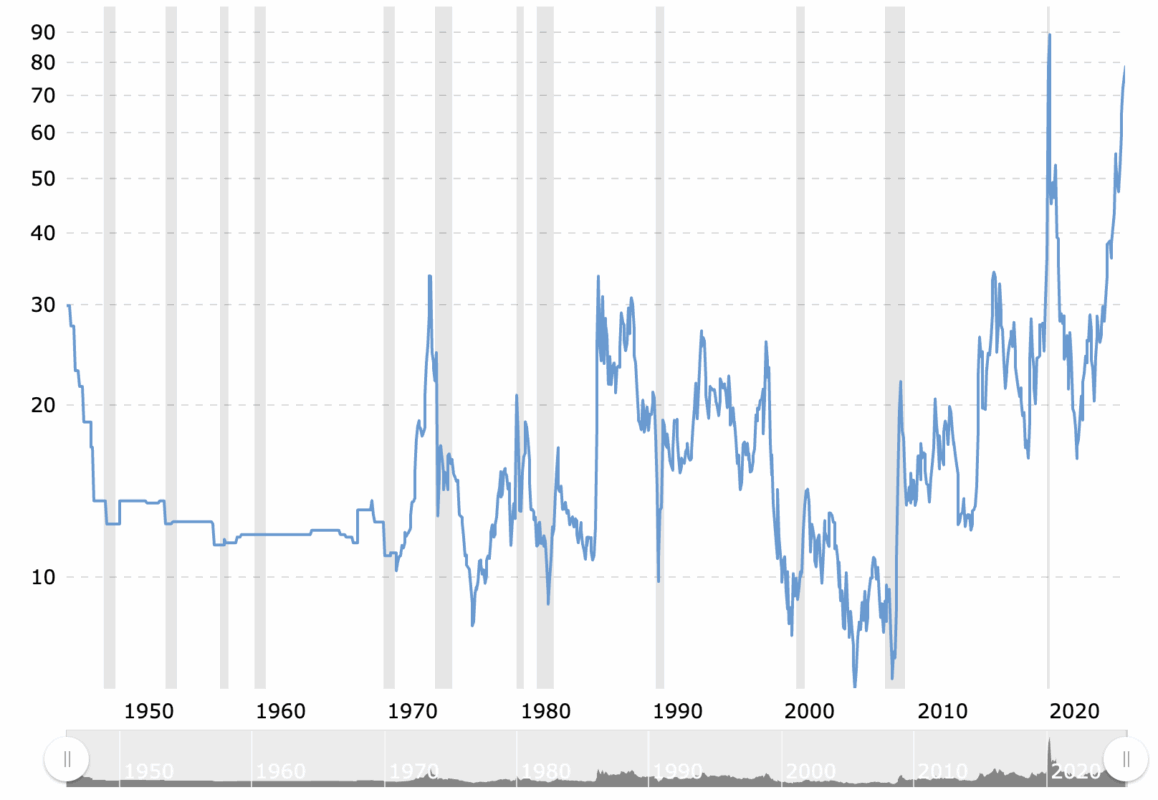
One useful lens for evaluating this relationship is the gold-to-oil ratio. As highlighted in Visual Capitalist’s analysis of the gold-to-WTI ratio from 1946 through 2024, the ratio often reflects both economic uncertainty and underlying energy demand. Notably, oil remains the world’s largest commodity market—roughly an order of magnitude larger than the gold market—making energy fundamentals central to global economic stability.
CapEx Planning and the Reality of Long-Term Oil Demand
As companies finalize 2026 capital expenditure budgets, oil demand and price expectations are increasingly grounded in long-term fundamentals rather than short-term narratives. The OPEC World Oil Outlook 2025 provides valuable context. According to the report, global primary energy demand is projected to increase by approximately 23% by 2050, with primary oil demand rising from about 308 million barrels of oil equivalent per day in 2024 to roughly 378 mboe/d.
This outlook directly challenges the idea that global oil demand is nearing an imminent peak. OPEC projects that global oil demand will reach approximately 123 million barrels per day by 2050, underscoring the scale of investment required simply to offset natural decline rates, let alone to support incremental supply growth. Maintaining balance in the global oil market will require sustained, disciplined investment measured in trillions of dollars over the coming decades.
Supply and Demand Fundamentals Reassert Themselves
On the demand side, electricity consumption in the United States is entering a new phase of growth. AI-driven workloads, data centers, and industrial electrification are placing increasing strain on regional power grids. In Texas and other high-growth regions, utilities and grid operators are facing a surge in interconnection requests and load forecasts that far exceed historical planning assumptions. Much of this incremental demand is expected to be met by natural gas-fired generation, reinforcing the role of hydrocarbons in supporting energy reliability.
On the supply side, the global oil market is moving beyond simplistic narratives of persistent oversupply. While inventories and floating storage fluctuate, production capacity constraints and geopolitical risks remain meaningful variables. OPEC and OPEC+ continue to manage output through coordinated policy, and market analysts increasingly question how much spare capacity can be brought online quickly without sustained investment.

Sanctions on certain oil-exporting nations, including Russia and Venezuela, continue to influence trade flows, tanker utilization, and pricing dynamics. While enforcement outcomes vary over time, these measures contribute to uncertainty around supply availability and market transparency. As a result, the oil market remains sensitive to both geopolitical developments and policy enforcement trends.
OPEC has announced that revised oil pricing and production management mechanisms are expected to take effect beginning in 2026, with 2027 designated as a period to evaluate production capacity and market response. This approach reflects a more pragmatic acknowledgment of geopolitical realities, investment constraints, and the need for price stability. For major producers such as Saudi Arabia, maintaining oil prices at levels sufficient to support fiscal obligations remains a critical consideration.
Implications for Consumers and Investors
In the near term, U.S. consumers may benefit from relatively stable or modestly lower energy prices if global supply remains adequate. Over time, however, a gradual and orderly increase in oil prices would better support rising demand without triggering disruptive volatility. Sharp price swings—either higher or lower—tend to be detrimental to both consumers and producers, discouraging long-term investment and undermining planning certainty.
For investors, the broader trend is clear: capital is rotating back toward commodities and tangible assets with durable demand profiles. Assets supported by real consumption, disciplined capital structures, and operational efficiency are increasingly favored over purely speculative growth narratives.
How Millennium PetroCapital Views 2026
From Millennium PetroCapital’s perspective, 2026 presents a compelling opportunity for U.S. oil and gas producers that focus on improving productivity, optimizing existing wells, and maintaining cost discipline. The first half of the year may be characterized by softer pricing and cautious sentiment, while the second half appears positioned for stronger demand and tighter market conditions.
Our portfolio focus on Texas and on enhancing production performance in established drilling areas aligns directly with these dynamics. By improving output without materially increasing costs, we are well-positioned to contribute to U.S. energy reliability while delivering attractive risk-adjusted returns for our investors.
We will continue to monitor market indicators, policy developments, and global supply-demand trends throughout the year. Stay connected with Millennium PetroCapital as we share ongoing research and insights shaping the 2026 energy landscape.
Author: Richard Monroy